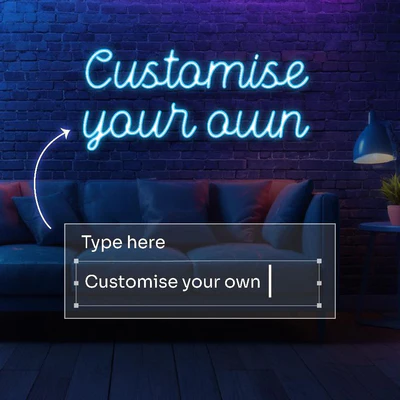
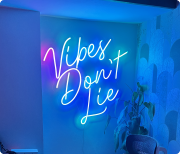



In the current competitive retail and business environment, neon lights have become more than just a decorative accessory; they are a branding tool. Whether it is a glowing business sign, a cafe quote wall, or a corporate logo wall, a modern neon sign or LED sign board is sure to grab everyone’s attention.
But have you ever wondered how a neon light board is manufactured? The process, from design to testing, involves creativity, engineering, and LED technology.
What Are LED Neon Signs?
LED neon lights are the latest developments in the traditional gas-filled glass sign industry. Instead of using fragile tubes, modern custom neon signs consist of flexible LED strips housed in high-quality silicone or PVC tubing.
This technology enables the production of highly durable, energy-efficient, and eye-catching signage solutions for businesses and events.
An LED neon sign offers the same bright light as traditional neon signs but with enhanced safety, durability, and energy efficiency.
Difference Between Traditional Glass Neon and LED Neon
Conventional neon signs consisted of glass tubes containing gas that needed high voltage. The new technology for LED sign boards replaces this with:
Low-voltage power supply (12V or 24V DC)
-
Flexible silicone diffusers
-
Energy-saving LED chips
While a glass neon sign is fragile, custom neon signs using LEDs are shock-resistant, lightweight, and easy to install.
Why Businesses Prefer LED Neon Sign Boards
Companies opt for neon light that use LEDs because:
They use up to 80% less power
-
They produce very little heat
-
They have a longer lifespan (30,000 to 50,000 hours)
-
They are fully customizable
Whether it is a logo that lights up or a customized neon lights name sign that is placed behind a reception desk, LED signs give businesses a cutting-edge look.
Common Applications of LED Neon Signs
Today’s custom neon lights are widely used for:
-
Retail storefront neon sign installations
-
Cafe and restaurant quote walls
-
Salon and clinic branding
-
Event decor and wedding backdrops
-
Corporate office reception logos
A well-designed neon light board not only enhances visibility but also strengthens brand recall.
Raw Materials Used in LED Neon Sign Manufacturing
Creating high-quality custom neon signs requires precise materials and electrical components.
Flexible LED Neon Strip (Silicone / PVC Housing)
The core of every neon sign is a flexible LED strip encased in:
-
UV-resistant silicone (preferred for outdoor neon lights)
-
PVC diffuser tubing
-
High-density LED chips mounted on flexible PCB
This housing diffuses light evenly, giving the smooth glow associated with classic neon light designs.
Acrylic Backing Sheet (Clear, Frosted, or Colored)
Every LED sign board is mounted on a sturdy acrylic base. Manufacturers use:
-
3mm to 10mm laser-cut acrylic
-
Clear, frosted, or colored sheets
-
Custom-cut shapes for logos and lettering
The acrylic board supports the neon light board structure and ensures clean installation.
LED Chips and PCB Technology
Inside every custom neon lights strip are:
-
Surface-mounted device (SMD) LEDs
-
Parallel circuit layouts for uniform brightness
-
Heat-resistant PCB layers
High-quality LED chips ensure your neon sign shines evenly without dim spots.
Power Supply & Transformer Units
A neon light powered by LED technology requires:
-
12V or 24V DC drivers
-
Surge-protected adapters
-
Waterproof transformers for outdoor use
Proper wattage calculation ensures long-lasting performance of the LED sign board.
Mounting Hardware and Wiring Components
Additional materials include:
-
Mounting spacers
-
Screws and wall plugs
-
Insulated copper wiring
-
Heat-shrink tubing
These components secure the neon sign and protect its electrical system
Step-by-Step LED Neon Sign Manufacturing Process
Manufacturing a professional neon light board follows a structured workflow.
Step 1 – Design & Digital Layout Creation
Every custom neon signs project begins with digital design:
-
Vector artwork preparation
-
Font selection for logos or neon lights name displays
-
Size scaling and layout planning
-
LED routing path mapping
This ensures the final neon sign matches brand specifications precisely.
Step 2 – CNC / Laser Cutting the Acrylic Base
Next, machines cut the acrylic backing using:
-
CNC routers
-
Laser cutting systems
Precision cutting ensures that the LED sign board structure perfectly aligns with the design layout.
Step 3 – Bending & Shaping the LED Neon Strips
Technicians then:
-
Measure strip lengths
-
Heat-bend the silicone tubing
-
Shape curves and lettering
This stage transforms straight LED strips into artistic custom neon lights designs.
Step 5 – Power Testing & Quality Inspection
Before dispatch, each LED sign board undergoes:
-
Voltage testing
-
Brightness consistency checks
-
Flicker and heat inspection
-
Waterproof testing for outdoor neon lights
Only after passing strict quality control is the neon sign approved for delivery.
Final Thoughts
The contemporary neon sign is a fusion of art and technology. Right from the flexible LED strips to the precisely cut acrylic, every process is designed to ensure longevity, safety, and brilliance.
Whether you are setting up a neon light board for your store or creating a customized neon sign for your business, the use of LED technology has transformed the industry of signage.
If your business requires greater visibility with reduced power consumption and a longer lifespan, it is a wise business decision to invest in professional custom neon lights.Neon Attack combines design expertise with technical precision to produce premium custom neon lights for businesses across industries.